
ChrisAfonso
-
Posts
2,922 -
Joined
-
Last visited
-
Days Won
1
1 Follower

Recent Profile Visitors
16,761 profile views






-
 ChrisAfonso reacted to a post in a topic:
New CD recording of John Williams Flute Concerto by Singapore Symphony Orchestra
ChrisAfonso reacted to a post in a topic:
New CD recording of John Williams Flute Concerto by Singapore Symphony Orchestra
-
ChrisAfonso reacted to a post in a topic:
DISCLOSURE DAY - First single "Listen..." released June 4th
-
ChrisAfonso reacted to a post in a topic:
John Williams suggested 4 composers to Spielberg for Disclosure Day before agreeing to score it himself
-
ChrisAfonso reacted to a post in a topic:
The Adventures of Tintin SEQUEL Anticipation thread
-
ChrisAfonso reacted to a post in a topic:
The Adventures of Tintin SEQUEL Anticipation thread
-
 ChrisAfonso reacted to a post in a topic:
I don't listen to John Williams any more!
ChrisAfonso reacted to a post in a topic:
I don't listen to John Williams any more!
-
Jesse reacted to a post in a topic:
John Williams' Piano Concerto for Emmanuel Ax - Premieres Saturday, July 26, 2025
-
 Sure, that's what I meant - you absolutely made the origin of the picture clear! My comment was about lots of other places that don't. Sorry if that came across wrong.
 -
BSOinsider reacted to a post in a topic:
John Williams' Piano Concerto for Emmanuel Ax - Premieres Saturday, July 26, 2025
-
BB-8 reacted to a post in a topic:
John Williams' Piano Concerto for Emmanuel Ax - Premieres Saturday, July 26, 2025
-
Jesse reacted to a post in a topic:
John Williams' Piano Concerto for Emmanuel Ax - Premieres Saturday, July 26, 2025
-
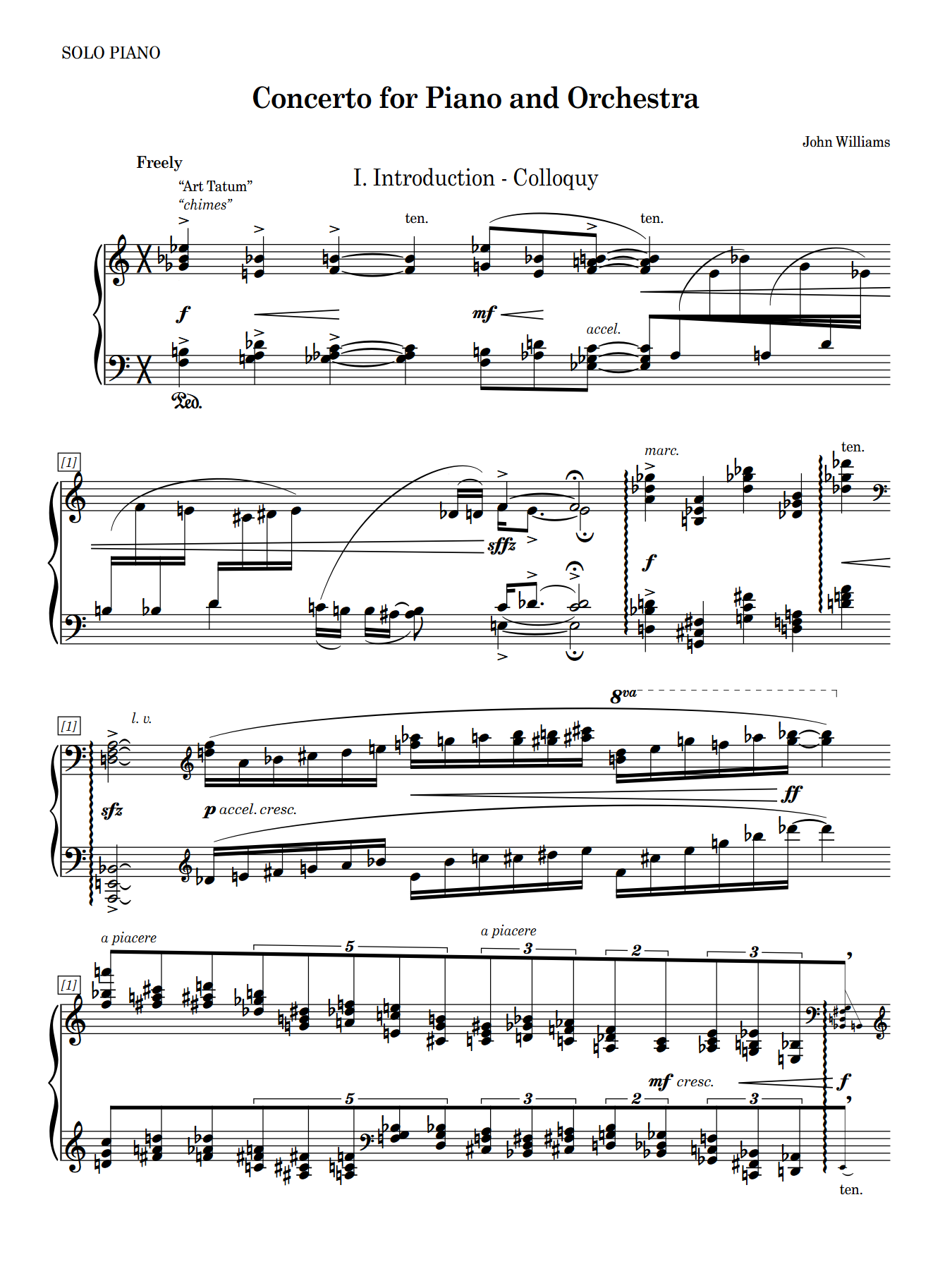
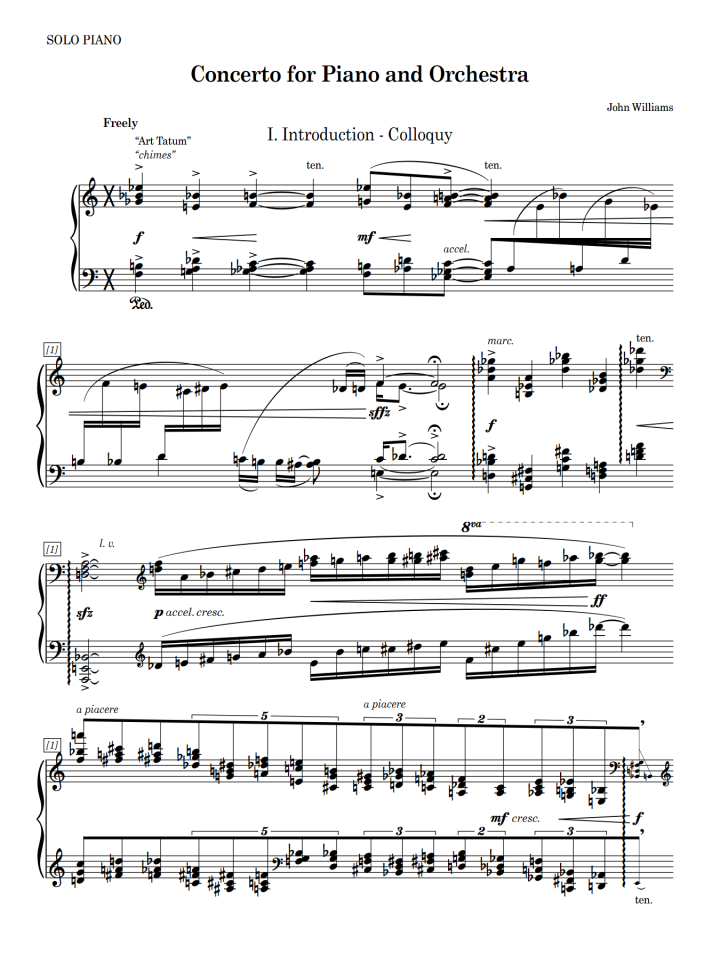
This tickled my fancy, so I tried to actually transcribe the page from the photo. This is what I got after an hour: Of course there's an amount of educated guesswork involved, as a lot of things in the photo are hard to make out with actual certainty (some text markup I couldn't decipher at all I just left out). Next step for an actual takedown intended for playing would be to check it against the recording chord by chord... Again, no ill will against the original post intended, but I find it interesting how stuff like this keeps popping up more and more. And not always with the proper caveat attached. There's a real temptation for people to "enhance" things and then pass them on in a form that sure looks "more visually pleasing" (sorry for the direct quote ;)), but at the same time deceptively definite (same problem as with chatbots making up fake details instead of admitting what they don't know). I'd almost always prefer the original image.
-
Jurassic Shark reacted to a post in a topic:
Omni Music Publishing Updates
-
ChrisAfonso reacted to a post in a topic:
Amazon buys up Middle-earth, it searches the One Ring! (Rings of Power news thread)
-
The piano reduction is left as an exercise for the reader
-
ChrisAfonso reacted to a post in a topic:
Omni Music Publishing Updates
-
ChrisAfonso reacted to a post in a topic:
John Williams' Piano Concerto for Emmanuel Ax - Premieres Saturday, July 26, 2025
-
ChrisAfonso reacted to a post in a topic:
John Williams' Piano Concerto for Emmanuel Ax - Premieres Saturday, July 26, 2025
-
God Of War (TV Series by Ronald D. Moore)
ChrisAfonso replied to Edmilson's topic in General Discussion
Looking forward to some norse mythology travel stories! -
He's entering his Dumbledore phase
-
Naïve Old Fart reacted to a post in a topic:
Film composers and the ballet
-
There's also "Othello" by Elliot Goldenthal (I think both the full ballet score as well as his shorter "Othello Symphony" is available).
-
Sabrina 2 CD from La-La Land Records (2023)
ChrisAfonso replied to DangerMotif's topic in JOHN WILLIAMS
I have this one: https://www.discogs.com/release/12492527-Henry-Mancini-Three-Sides-Of-Henry-Mancini Which "side" you should end your parties with might depend on the athmosphere in the room -
Is symphony the highest musical accomplishment?
ChrisAfonso replied to filmmusic's topic in General Discussion
I think several factors contribute, apart from "tradition": Strings only due to a desired "unified sound", which this instrument group has a bit more than brass, and much more than woodwinds - though groupings like the piano trio or "wood"wind quintet are also a very common and revered genre, more targeted towards highlighting the contrast of sound. With strings only, the quartet is somewhat in a "sweet spot" between (too?) sparse (duo, and trio to some extent) and mounting redundancy - quintets, sextets, or above require more skill in balancing melody and accompaniment, which comes with the increased number of options for combining voices. (I recall a funny remark of Beethoven when he took it upon himself to improve a string quintet arrangement of one of his piano trios an admirer had sent him, "I transformed a quintet in 3 voices into a proper 5-voiced one" ) -
Is symphony the highest musical accomplishment?
ChrisAfonso replied to filmmusic's topic in General Discussion
Great discussion, and a lot of great points made! Regarding the sometimes diametrical views what a symphony even is, I always like the famous quote from a Sibelius and Mahler discussion (from memory) "A symphony is absolute unity of form" - "No, a symphony is like a world, it has to contain everything!". It can be anything between these points - or farther out either side of them On the question of "pinnacle of achievement", it's just a different thing - of course it's quite a task to write a long, coherent work for a big ensemble, but at the same time it's often harder to write a similarly long, engaging work for a very small ensemble, which lays bare the composer's raw skill with "the notes" (as compared to "dressing them up" with orchestration -- without going into the topic of orchestration-as-development). See Shostakovich's symphonies vs his string quartets, for example. -
Alexandre Desplat - Jurassic World Rebirth (2025)
ChrisAfonso replied to Toillion's topic in General Discussion
? -
The "Hymn" sample does indeed sound much more transparent than the previous releases, offering more clarity! (some of those trumpet calls were previously completely buried in the muddier mix). However, something about the dry front-and-center sound of the timpani rubs me the wrong way...
-
Stéphane Denève conducts John Williams in Berlin, June 5-7 2025
ChrisAfonso replied to Jay's topic in JOHN WILLIAMS
What an awesome concert! The orchestra really gave their all, and Dénève masterfully led through the evening (with a good dose of humour sprinkled in ;)). Good idea also to play snippets of Hedwig's theme and the Theme from Jaws as a little guessing game, as a treat for those who would miss these most iconic moments in the different selections from those scores that followed. Unparalleled acoustics and ensemble sound, and many beautiful solos by the musicians. My favorite parts: - Dracula, Night Journeys: Just throughout amazing playing, intensity, solo passages, buildup to the tutti climax - E.T. suite: works really well as a "symphony" of sorts, what with the thematic closure brought by starting and ending with the "call" motif. When the organ entered in "3 million light years from home", it shook our seats - instant goosebumps. - Shark Cage Fugue: That intensity... those bass trombone notes... - Fawkes the Phoenix: Such a simple theme, which only in the hands of such a master arranger hits all the right buttons - Sayuri's Theme: simply sublime - Luke and Leia: Most heartfelt version of the horn solo I've heard yet. (Pity about the shortened intro&interlude Williams sees to prefer nowadays... eternal bugbear of mine) -
I have the impression that some here didn't get his obvious sarcasm... As to the below: The leaked original 3-volume outline strongly supports this, would supposedly have been a much more streamlined affair with more clichéd plot developments and less of the rich storytelling we got so far.
-
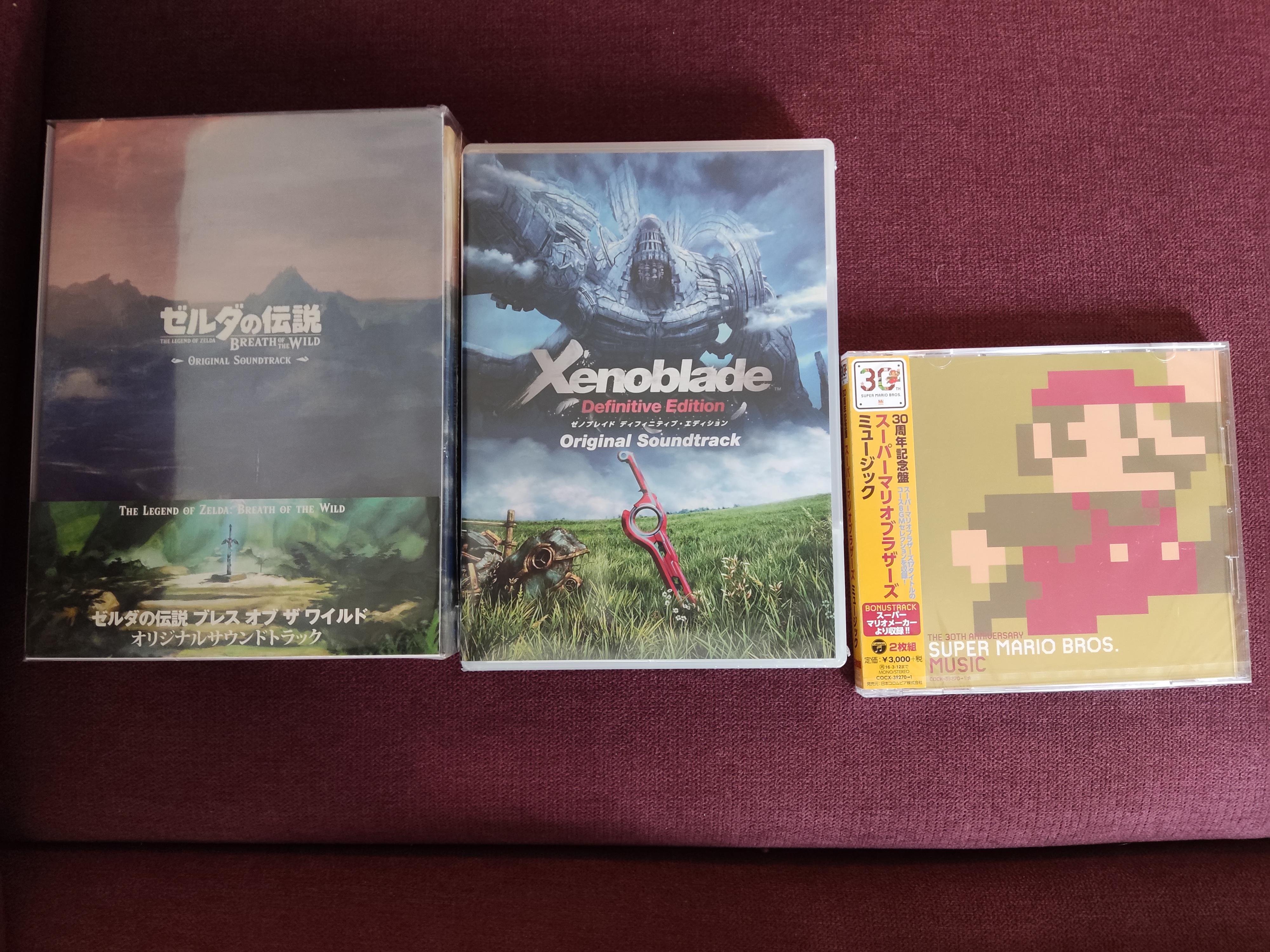
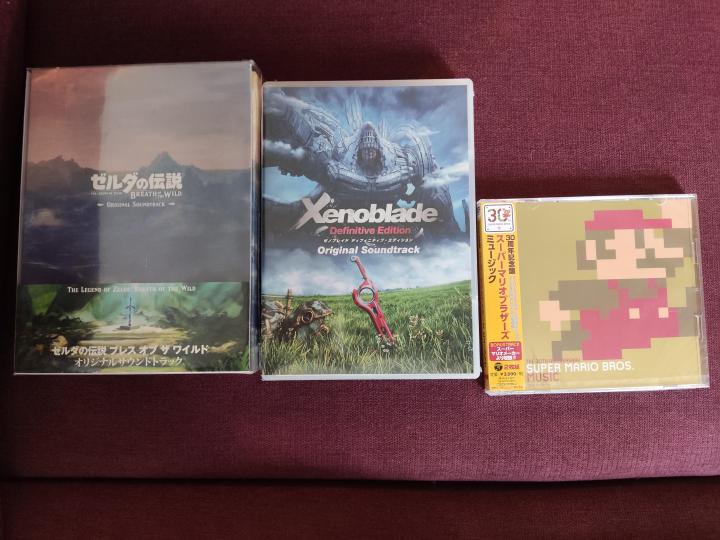
Snagged a few favorites for reasonable money while visiting Japan:
-
Just to add a bit to the theory here (sorry if that's superfluous)... the italian tempo markings, same as the english ones (or french, or german, depending on the composer) are more an indication of character, rather than simply a fixed tempo - the usual tempo ranges for the most common markings became somewhat standardized over time, so e.g. many notation apps automatically set a default playing tempo for each of these, and musicians will play them roughly similarly fast/slow. But depending on conductor/interpretation, there can be quite a range in the realized tempo (as in beats per minute), e.g. when something like "Vivace" (lively) is written without a metronome mark (which only entered wide use later). Of course in the original film cues, Williams always defines an exact tempo (sometimes with sub-fractions of beats per minute), but sometimes changes these for the concert suites - I always wonder if that's the actual tempo he had in mind for those cues all along, or if he later changed his mind about the tempo that would make the music come across best, at least insofar as he intended.