
mark_rayen
-
Posts
22 -
Joined
-
Last visited
Recent Profile Visitors




-
 Sam s. reacted to a post in a topic:
"John Williams: A Composer's Life" - Biography by Tim Greiving
Sam s. reacted to a post in a topic:
"John Williams: A Composer's Life" - Biography by Tim Greiving
-
 Martinland reacted to a post in a topic:
"John Williams: A Composer's Life" - Biography by Tim Greiving
Martinland reacted to a post in a topic:
"John Williams: A Composer's Life" - Biography by Tim Greiving
-
mark_rayen reacted to a status update:
Hi Mark. I just have to say that your post was really special to me. It's so amazing
-
ConorPower reacted to a post in a topic:
"John Williams: A Composer's Life" - Biography by Tim Greiving
-
MaxTheHouseelf reacted to a post in a topic:
"John Williams: A Composer's Life" - Biography by Tim Greiving
-
enderdrag64 reacted to a post in a topic:
"John Williams: A Composer's Life" - Biography by Tim Greiving
-
Hi Mark. I just have to say that your post was really special to me. It's so amazing to see how far and wide my book is traveling, and thank you for your very kind and inspiring words.
Please enjoy!
Tim
-
@Maestro Thank you again for such an important opus! I look forward to following your writing in the future. - Mark
-
-
Brando reacted to a post in a topic:
"John Williams: A Composer's Life" - Biography by Tim Greiving
-
Maestro reacted to a post in a topic:
"John Williams: A Composer's Life" - Biography by Tim Greiving
-
Yavar Moradi reacted to a post in a topic:
"John Williams: A Composer's Life" - Biography by Tim Greiving
-
Badzeee reacted to a post in a topic:
"John Williams: A Composer's Life" - Biography by Tim Greiving
-
Andy reacted to a post in a topic:
"John Williams: A Composer's Life" - Biography by Tim Greiving
-
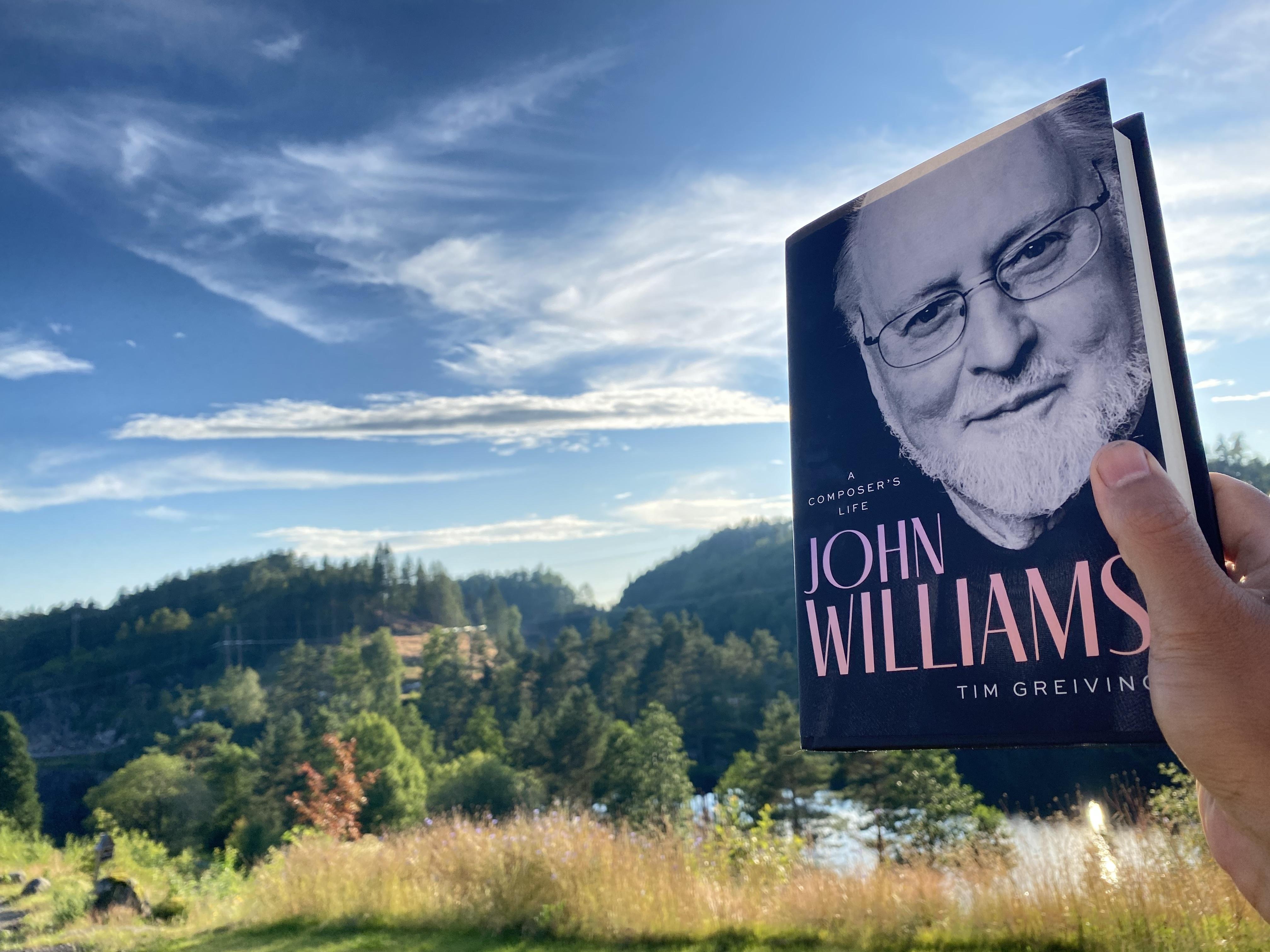
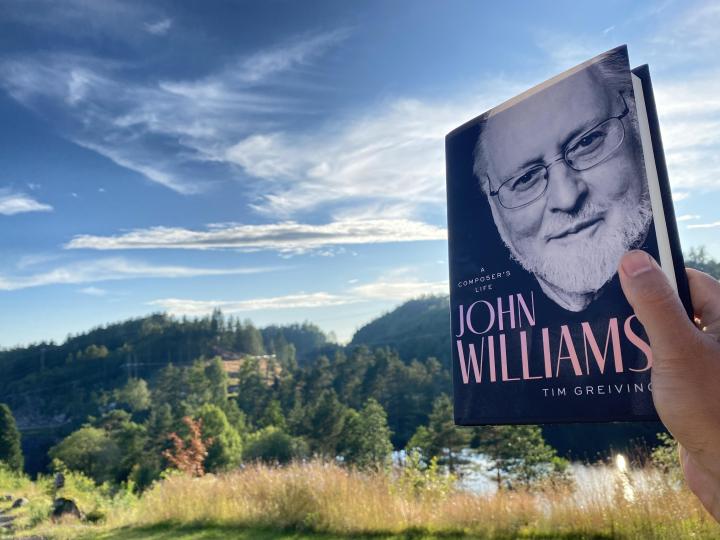
I felt a strong urge to chime in to simply express gratitude for the existence of this book! Quite literally "out of the blue" it popped up on our farm in rural Norway today, as my 5 year old came running with the parcel after having spotted the postman on his route. My interest in the book sparked while reading Grieving's brilliantly narrated "Behind the Moon" substack, which has helped revitalize my early passion for Williams' life and output. I am thankful for that! I hope the book performs well, and that there will be more great literature to look forward to from this author.
-
Were Mozart und Beethoven that great? Or just really popular?
mark_rayen replied to BLUMENKOHL's topic in General Discussion
. -
That's a pretty good question. A really great thing about reading this forum is that you get so many great and elaborate answers from the many gifted thinkers out there, but the way I'm reading it the answer is actually very simple: It's the V of V with a lowered fifth, inverted to place the lowered fifth as the root (an A major chord with the E lowered to D# and placed as the root) which in this way neatly leads to D natural, the root of the dominant. I'm not sure if there are other ways to interprete it? The added F# may complicate it beyond my explanation? Edited to add: glancing at it a second time I'm pursuaded to think there is a better explanation!
-
I went to that concert and it was great but I remember being disappointed because JW wasn't conducting. I attended that one too. Williams was scheduled to conduct at first, but was eventually replaced by Dirk Brossé. I remember clearly that the reason for his decline being cited as the War of the worlds project for Speilberg.
-
The tenuto is marked on the second beat of your example, which is normally an unaccented beat. So it would seem the orchestrator wants the first note emphasized to almost sound like a syncopation (considering the rhythmic "anatomy" of the 4/4 metre), to sound slightly interruptive with authority and decisiveness, but not accented. It hasn't anything to do with rubato. I agree with you though, tenuto notation is a tricky concept! Hope you figure it out
-
.
-
JWFan Composers My Piano Transcriptions
mark_rayen replied to WilliamsMusicLover1138's topic in General Discussion
Such an impressive job. I really admire your diligence! I printed the Dartmoor arrangement, and enjoyed playing through it very much. I was a little sceptic as to how it would work as a solo piano piece, since it clearly isn't written for that purpose at all. But it has the potential to work fine. I hope its ok to offer a little critique? - Some slight notation errors, mainly rhytmic in nature. In measure 3, you need to make it clear that the g is accented, not the c. And in measure 9 you abandon Williams' idea of the interruptive flute, which I think is crucial. So I would suggest removing those extra beats and making the abrubtiveness audible. Otherwise, those measures just don't make sense.. ;-) - In measure 4, there are two things. Firstly, the dynamic marking doesn't work. It needs to be forte, and its appassionato, with great intensity! Once again, its the contrast Williams is after. The three-measure long flute solo introduction, which one expects to continue, is interrupted by this passionate outburst (very clever, isn't it!). It needs to become clear in your arrangement as well. The second thing, and that is a general thing, is that you seem to underestimate voicing. The melody needs to be lifted an octave, and the voicing needs to be spaced out in order to better match the intensity of the string orchestra the passage was originally written for. I quickly made an example of how I might have solved the issue, personally. I'll post a link afterwards in case your interested :-). - Measure 22 needs to be in 6/8 time, I think...? - The quick figures from 32 could use some fingering advice? I would also consider marking them "leggiero". Later, when the quick figure returns as commentary to the new melody starting at measure 40, the quick figures should be placed below the accompanying left hand figure, in the bass! After all, Williams wrote it out in widely spaced octaves, and that's exactly the thing that makes it work. So I think it would be wiser to prioritize the dazzling appeal it has in that register instead of the dull middle register of the piano. Another argument to do this, is that this way it won't get confused with the melodic voice, which is slightly disturbed by it. I hope you know what I mean, and again, think about marking it "leggiero"? :-) - In measure 53, you could accent that wonderful detail starting on the third beat, by writing the right hand part in octaves. Its fun to play it that way, and the expressive potential is so much increased, IMO. :-) - The new melody in measure 58 needs to be written out in octaves. It sounds unbelievably dull in a single voice. I also think you could make more of the bass part. Something is lacking, I feel. In general, it needs to sound "tutti". Finally, thanks for the great work! I enjoyed having this wonderful music in front of me :-) Link to my personal suggestion, considering the opening of "Dartmoor, 1912": https://rcpt.yousendit.com/1429562896/2caa967b02778c0d4515c6a68213cd1b -
Composing and overcoming writers block
mark_rayen replied to PIANOMUSICIAN1991's topic in General Discussion
Maybe you have "overused" your musical vocabulary, or have satisfied your expressive needs through previous works. If the former is the case, perhaps you should put your long term ambitions aside and do some smaller excersizes that might help you expand your technique. If the latter, your in a luxurious situation. Perhaps the best thing then is to slow down, catch your breath, and try to redefine yourself both musically and personally before you dive back into it! -
Actually, the man behind the orchestration is Jeremy Lubbock, a longtime collaborator of both Michael and the rest of the Quincy Jones "family". And if anyone had artistic input on the song other than Jackson and Lubbock themselves, it would be David Foster, another longtime collaborator. He both performed the piano part and co-produced the record with Jackson. I think the song is wonderful and deeply poetic, however direct and intimate. One can sense how important it was for him to express his sadness in a song like this. Though I must say my favourite on HIStory would have to be 'Stranger in Moscow'. In this interview, recording engineer Bruce Swedien shows off the score for 'Childhood' to CNN:
-
Maestro, I feel exactly the same way. Thanks for sharing. I haven't been vocal about my relationship to him since I was around 17, it became too painful when classmates and people around me would offend me with horrific comments, jokes, and even go as far as to question my intelligence for supporting him. Although my responses were always to the point, factual, source-orientated, and with a heartfelt sincerity the mocking persisted for so long that I shut up and never ever mentioned his name to anyone for years. It may have been weak of me, but it says something about the terrible celebritry injustice he has suffered the last third of his life, and how many otherwise intelligent and rational thinking individuals subliminally and also culturally absorbed the media imposed notion that Michael Jackson was a freak and did not deserve any respect or even his privacy. Had the distasteful, mocking comments about him surfacing on the internet and tabloid newspapers been about anyone else than Michael Jackson, criminal charges of verbal harassment could and likely would have been made. I was so happy to see Norwegian politician Jan Simonsen emphasize that point yesterday, and saying he wishes he had been brave enough to nominate Michael Jackson for a Nobel peace prize years ago. He was also the man responsible for nominating Bob Geldof. I just hope his name will finally be rested now, I loved him too.
-
Williams' "Concert" Suites... which actually work live?
mark_rayen replied to Bowie's topic in General Discussion
Jane Eyre works! It was like a kind of three-movement sinfionetta (slow-fast-slow). Does anyone know if there exists a recording of it? -
Williams' Concerto for Viola and Orchestra to premiere May 26
mark_rayen replied to Miguel Andrade's topic in JOHN WILLIAMS
About pictures: by the entrance to Symphony Hall it says "flash photography" is prohibited, which means that if you disable your flash theres no harm in taking pictures. I had my camera clearly visible on the table and nobody complained. -
Williams' Concerto for Viola and Orchestra to premiere May 26
mark_rayen replied to Miguel Andrade's topic in JOHN WILLIAMS
Sorry, I forgot to mention Hook was performed as well! Exhilarating performance in an even quicker tempo than I've heard it before. During the following applause there was a funny old lady by my table who made the snobbish remark "I don't recognize any of his tunes!". -
Williams' Concerto for Viola and Orchestra to premiere May 26
mark_rayen replied to Miguel Andrade's topic in JOHN WILLIAMS
The concert last night was excellent! The program was as follows: Huray for Hollywood! Themes from Adventures of Robin Hood Suite from Jane Eyre INTERMISSION Concerto for Viola and Orchestra Adventures of Mutt INTERMISSION March from Superman Selections from Far and Away Raider's march Themes from Lawrence of Arabia Encores: Yoda's theme and the Star Wars theme The highlights of the program were in my experience the suite from Jane Eyre and the new Concerto for Viola. The performances were stunning and Williams conducted with such inspiration, and a sensitivity on the podium I didn't even know he had. He was clearly enjoying himself and his conducting was about as precise and crystal clear as many of his film scores. I think many here will be pleased to hear that the concerto is composed in a romantic idiom very similar to much of his film work. It is perhaps one of his least experimental concert works to date. The outer movements are slow, emphasizing the lyrical abilities of the soloist, while the second movement is a classic Williams scherzo with a fun timpani/viola duet in the middle that also features a couple of fun timpani glissandi towards the end. The opening movement evolves around an enchanting melody, which is in character similar to the theme from Memoirs of a Geisha but with a much broader structure as well as a sensitive developement section. Cathy Basrak, the soloist, performed this theme wonderfully and with great nobility in my opinion. The exposition of the theme also had some delightful solistic comments from the flute (most notably), horn, and oboe. My only critisism for the entire work would be the early and in my opinion intrusive tutti climax only a few minutes into the movement. The exaggerated Hollywood-like orchestration spoiled that particular section for me, and I also failed to appreciate why it was even there in the first place. This lack of patience in Williams' approach to form is in my opinion perhaps his greatest weakness. Thankfully though, it didn't last too long. The preparation of the cadenza was somewhat unusual in that the orchestra discretely faded out instead of building tension and dramatic expectation like we usually get to hear. Although the cadenza was difficult with intricate double stops, it seemed more a quiet meditation than virtuosic statement, something I greatly appreciated. The ending of the movement was again wonderful and truly had Symphony Hall in tears. The final movement was also meditative, in a way similar to the final movement of Five Sacred Trees. It opened with the viola on its own and was soon joined by the harp, which for the occasion was moved right in front of the podium for better communication with the soloist and Williams. The movement later re-explored the theme from the first as well as revisiting the flute/viola combination. The audience reception resulted in a well deserved standing ovation and I believe the work to be one of Williams' greatest accomplishments. I would rank it even higher than the Mikos Rozsa concerto for viola, for those who are familiar with that. It is one of the most lyrical and most heart-felt and sincere works he has done. Perhaps in time it will prove to be one of the greatest contributions to the modern viola repertoire. At least it left me deeply touched. Adventures of Mutt was a joy. Williams was smiling ear to ear and it seemed obvious that he loves conducting it. The humour in that piece is just incredible, and in my opinion one of the best arrangements he has ever concieved. The last section of the program consisted mainly of the obligatory must-do film themes. Williams seemed very tired and the performances weren't top class. The tribute to Maurice Jarre was however lovely and a worthy ending to a lovely evening! - Mark