-
Posts
752 -
Joined
-
Last visited
-
Days Won
18
10 Followers





Recent Profile Visitors
12,769 profile views


-
 Falstaft reacted to a post in a topic:
DISCLOSURE DAY - Unofficial preview of two OST tracks now available
Falstaft reacted to a post in a topic:
DISCLOSURE DAY - Unofficial preview of two OST tracks now available
-
 Jofi_ reacted to a post in a topic:
DISCLOSURE DAY - First single "Listen..." released June 4th
Jofi_ reacted to a post in a topic:
DISCLOSURE DAY - First single "Listen..." released June 4th
-
Falstaft reacted to a post in a topic:
DISCLOSURE DAY - Dolby's social media posts new footage of Williams conducting with new music heard
-
 BrotherSound reacted to a post in a topic:
DISCLOSURE DAY - First single "Listen..." released June 4th
BrotherSound reacted to a post in a topic:
DISCLOSURE DAY - First single "Listen..." released June 4th
-
 Falstaft reacted to a post in a topic:
DISCLOSURE DAY - OST Album (and general thread for any score news) NO FILM SPOILERS ALLOWED!!
Falstaft reacted to a post in a topic:
DISCLOSURE DAY - OST Album (and general thread for any score news) NO FILM SPOILERS ALLOWED!!
-
 Falstaft reacted to a post in a topic:
DISCLOSURE DAY - OST Album (and general thread for any score news) NO FILM SPOILERS ALLOWED!!
Falstaft reacted to a post in a topic:
DISCLOSURE DAY - OST Album (and general thread for any score news) NO FILM SPOILERS ALLOWED!!
-
Bayesian reacted to a post in a topic:
DISCLOSURE DAY - First single "Listen..." released June 4th
-
Falstaft reacted to a post in a topic:
DISCLOSURE DAY - First single "Listen..." released June 4th
-
QuartalHarmony reacted to a post in a topic:
DISCLOSURE DAY - First single "Listen..." released June 4th
-
Jay reacted to a post in a topic:
DISCLOSURE DAY - First single "Listen..." released June 4th
-
RomanticStrings reacted to a post in a topic:
DISCLOSURE DAY - First single "Listen..." released June 4th
-
Amer reacted to a post in a topic:
DISCLOSURE DAY - First single "Listen..." released June 4th
-
BachSkywalker reacted to a post in a topic:
DISCLOSURE DAY - First single "Listen..." released June 4th
-
ChrisAfonso reacted to a post in a topic:
DISCLOSURE DAY - First single "Listen..." released June 4th
-
BB-8 reacted to a post in a topic:
DISCLOSURE DAY - First single "Listen..." released June 4th
-
DISCLOSURE DAY - First single "Listen..." released June 4th
Falstaft replied to Under-Terrestrial's topic in JOHN WILLIAMS
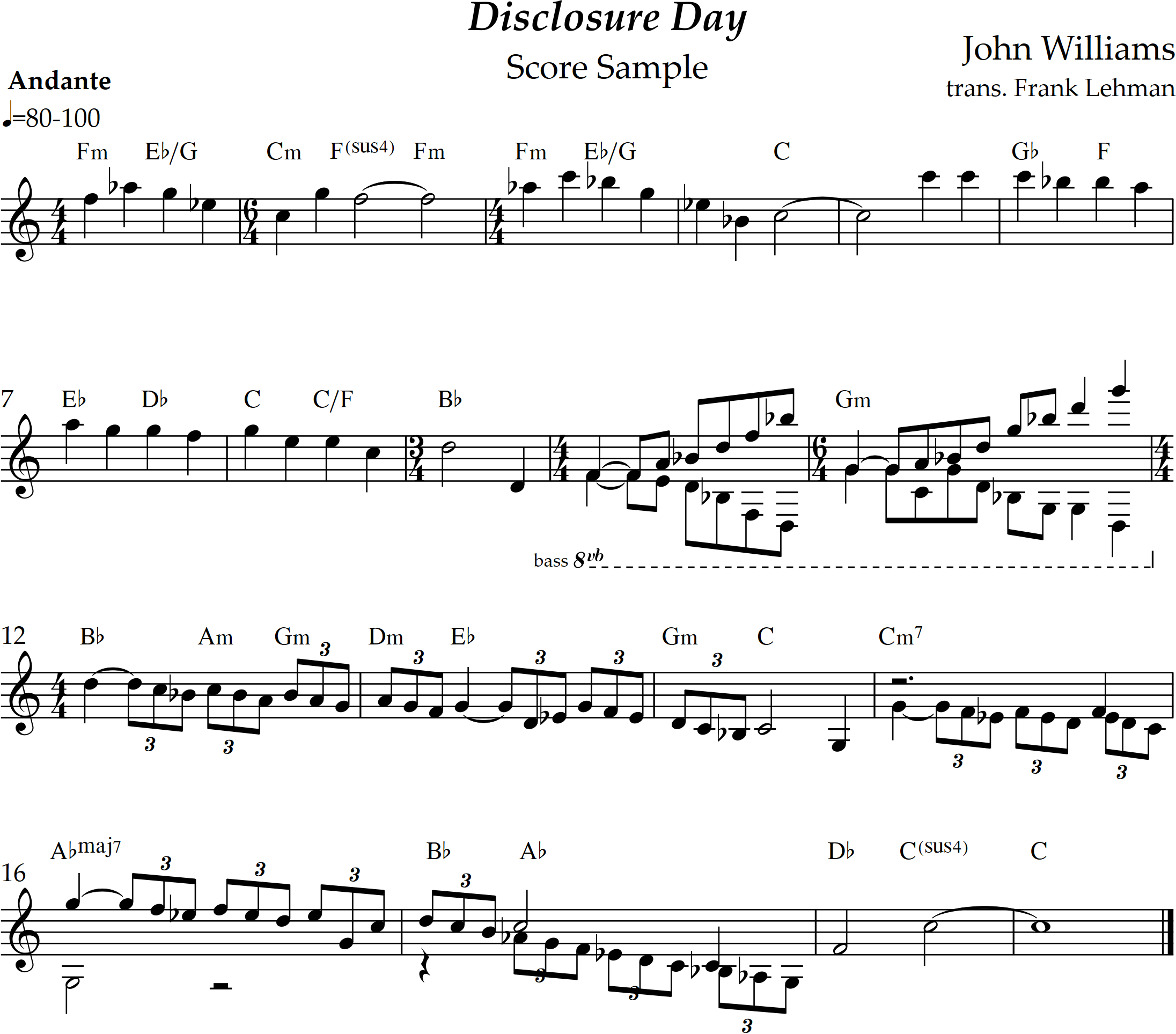
I'm trying to remain unspoiled about this film and it's score, so apologies if this has been posted in another thread, but I could not resist transcribing this gorgeous sample that's been released.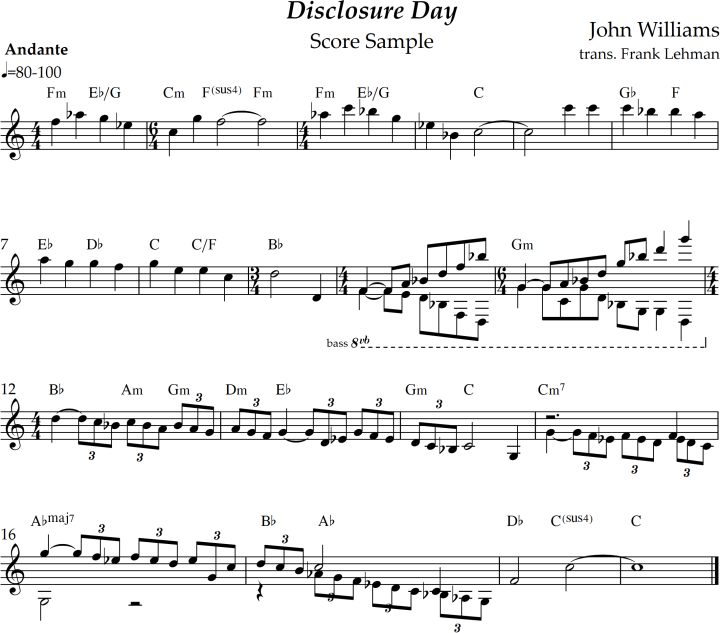
- 213 replies
-
- 10
-
-
-
-
Falstaft reacted to a post in a topic:
Disclosure Day's 20-Minute Finale
-
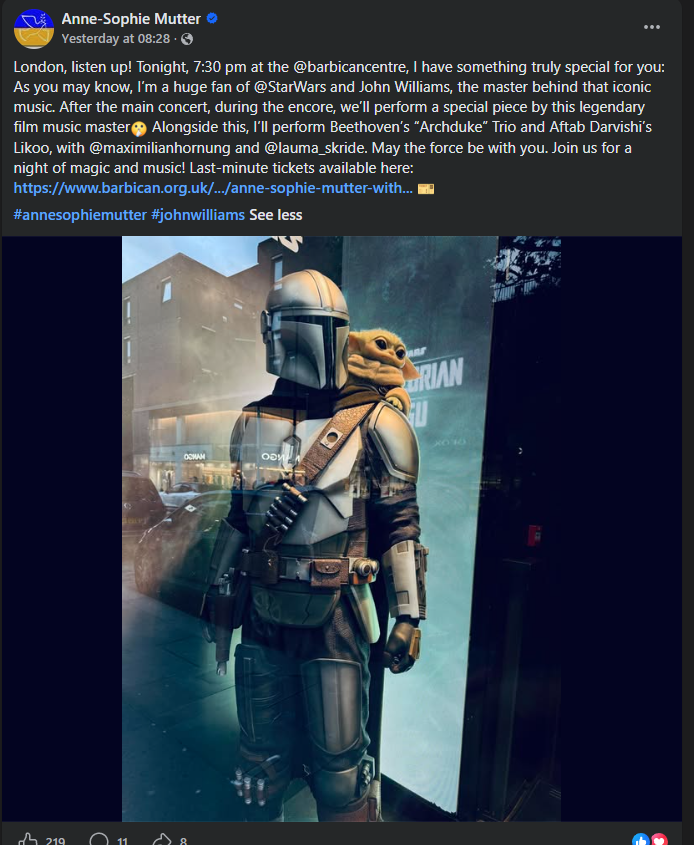
Anyone attend the ASM concert last night at the Barbican and happen to hear what the (presumably new, presumably Star Wars) violin/piano arrangement she played?
-
Falstaft reacted to a post in a topic:
enderdrag64's Star Wars Cue by Cue
-
Falstaft reacted to a post in a topic:
The Rise of Skywalker - COMPLETE SCORE Discussion - SPOILERS ALLOWED!
-
Falstaft reacted to a post in a topic:
Star Wars Episode III: Revenge of the Sith
-
Falstaft reacted to a post in a topic:
Williams in attendance for Trumpet Concerto performance at Disney Hall (March 13-15 2026)
-
Is symphony the highest musical accomplishment?
Falstaft replied to filmmusic's topic in General Discussion
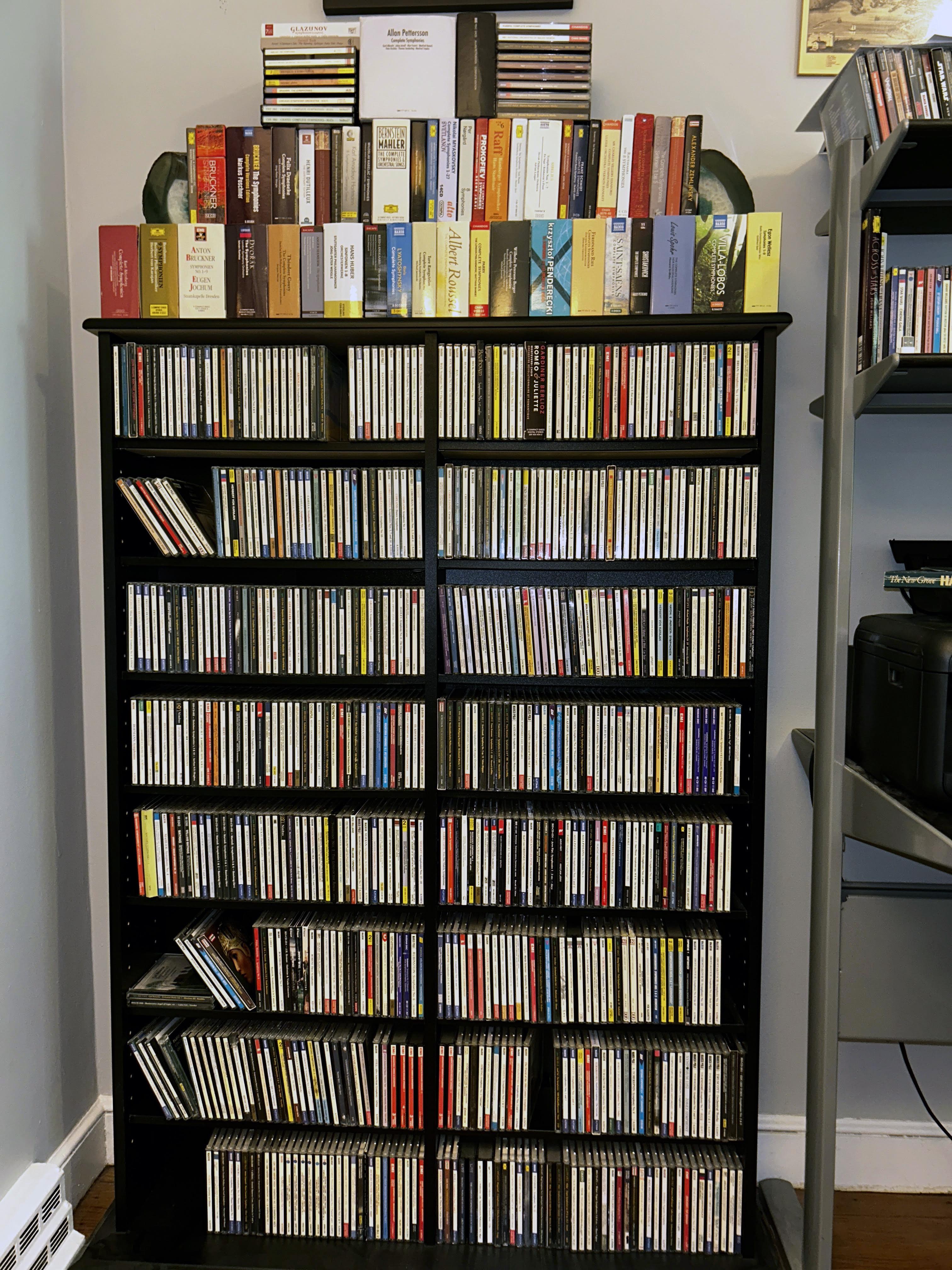
That's the Tintner cycle on Naxos -- my go-to in most cases! -
Is symphony the highest musical accomplishment?
Falstaft replied to filmmusic's topic in General Discussion
Your friend is certainly right that the symphony has carried a prestige since the late 18th century that audiences, critics, and most importantly composers have recognized and grappled with. It has been seen as a kind of aesthetic summit, yes. That said, I don't know any musicians who would ever insist that great works in other genres are necessarily lesser than symphonies; that's ridiculous, no matter what yardstick for "greatness" you use. You mention the criteria of formal tight-knitedness and technical difficulty: these are historically attached as much to, if not more, to the string quartet and the piano sonata. One has Beethoven (and the reception and milleu that enabled his success) him to thank to thank largely for the value ascribed to those two genres. Before LvB and Haydn, high prestige genres included masses, fugues, chorale preludes, passacaglias, etc. Opera has had its ups and downs of cultural primacy, but certainly following Wagner, a man who envisioned his music dramas in explictly (and entirely self-justifying) terms as symphonic, it must rank high in any list of high-prestige genre. The more one learns about the symphonic genre, the more one realizes your generalizations break down, and what you thought you knew is only a sliver of what is to be known. I say this as someone with...a bit of an obsession, not strictly academic.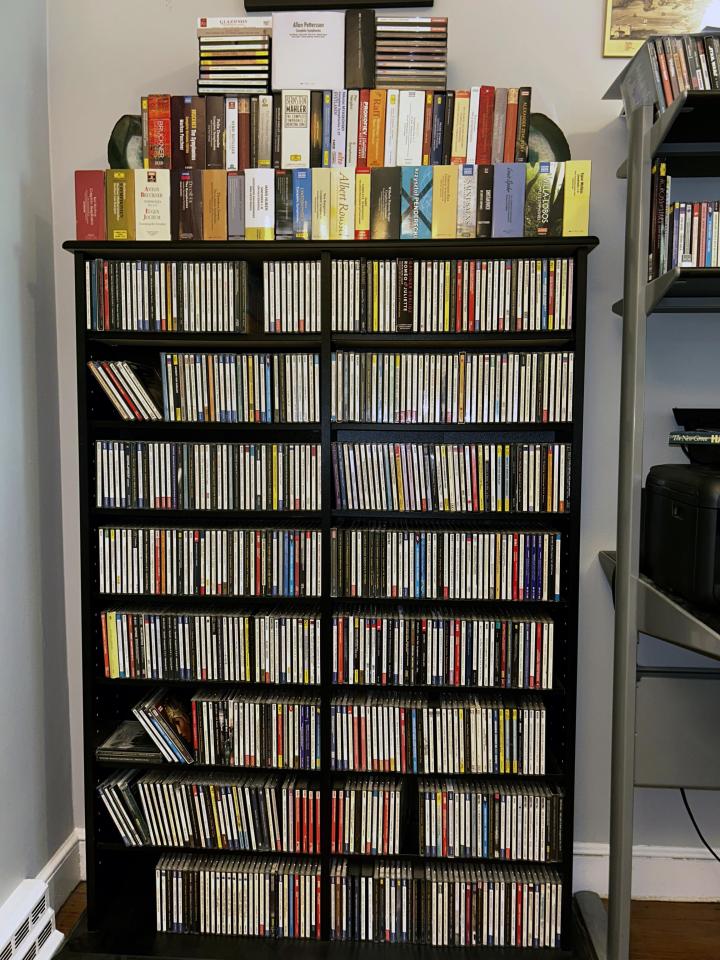
-
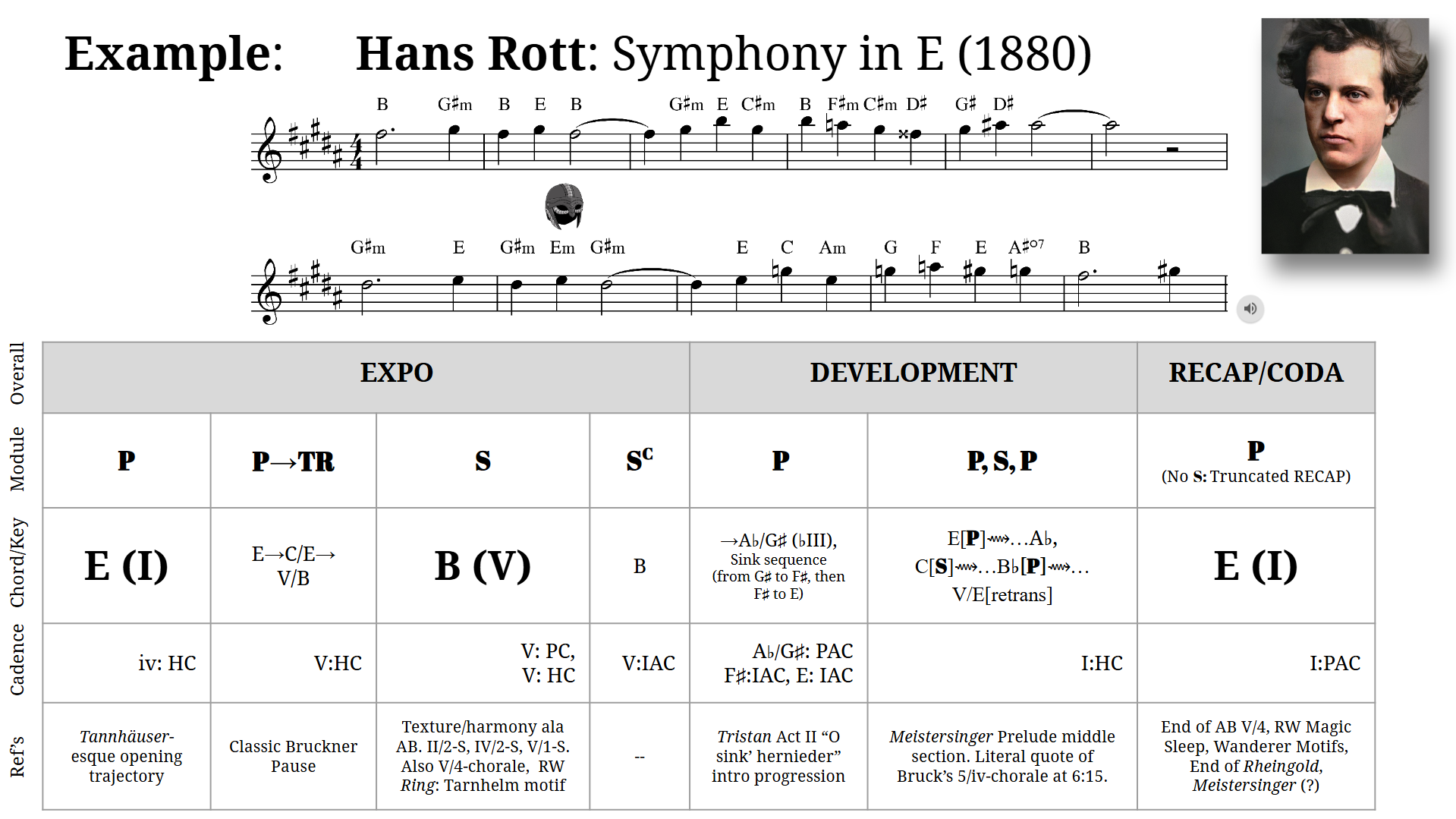
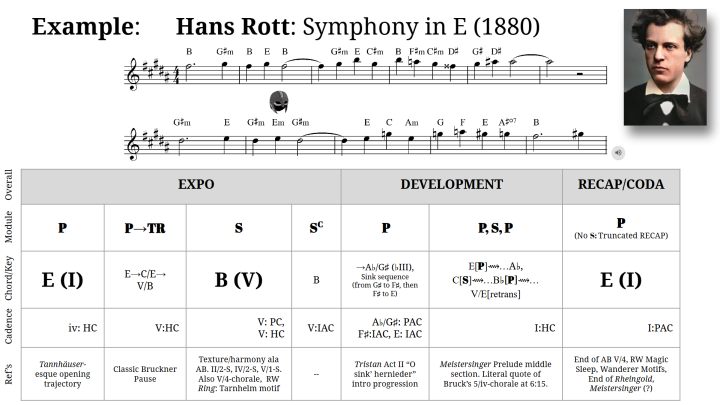
Not to detract further from a thread that's supposed to be about Williams's big new work, but when someone mentions my other favorite topic -- composers influenced by Bruckner -- I can't resist. Here's a chart of the Rott symphony's 1st movement with indications of music that served as a likely model, with an emphasis on the Second Subject. Part of a conference talk I gave last year. Back to the topic of the piano concerto. Those of us attending the concert are all rightly happy that Williams is going to be there in attendence. But what gives me even more joy is the thought that the maestro, at his age, is right at this moment spending time in such a sacred location for him, personally. I cannot imagine how meaningful it must be.
-
Clearly synth to my ears, though very good samples. I'm pretty certain is not some undiscovered Williams music. The first follows TLJ 7m68A closely for the first 30 seconds or so, then is followed by well-done fantasia on Williams-esque action scoring ala "Chrome Dome." The stuff 1:16 to 2:00 in the secondtrack is not from any specific Williams cues, though it does seem to channel ANH 1m3 and ROTS 1m3. The rest is main title or the March of the Resistance, more or less verbatim save for some cuts and transitions in the latter.
-
What a great topic! ... And this, very best of all. Though I'm not sure I'd call it a countermelody until the 1:05 mark, but it's one of the greatest things he ever wrote so why not:
-
So...what of Wagner was Howard trying to homage in Days of the Ring?
Falstaft replied to Chen G.'s topic in Tolkien Central
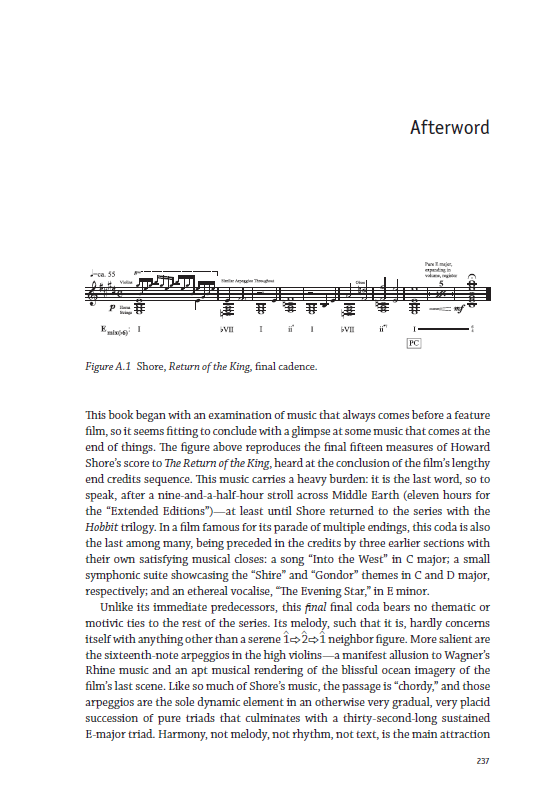
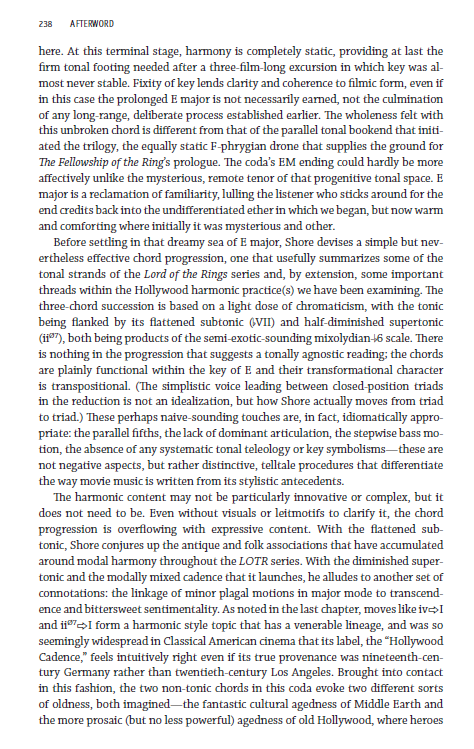
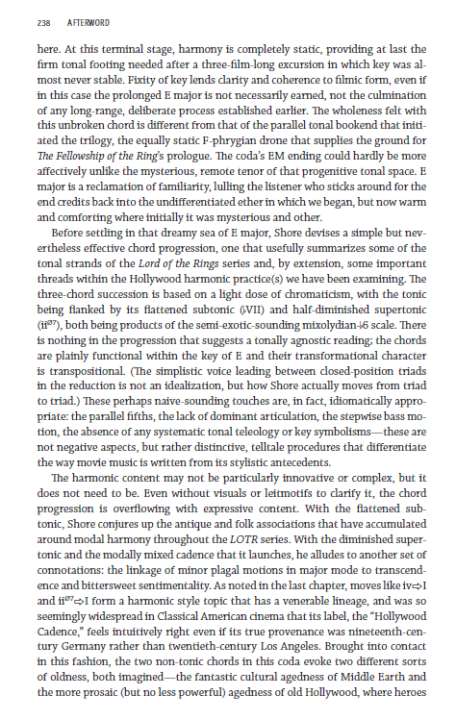
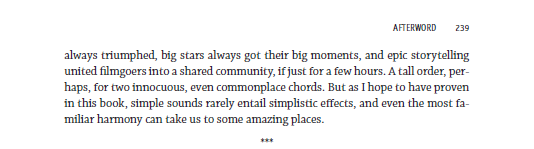
For whatever small amount it's worth, this passage was the subject of the Afterword of in my book Hollywood Harmony. I apparently called it a "manifest allusion to Wagner's Rhine music." Maybe not so manifest though, now that I think about it. Admittedly, it's a superficial resemblance and one someone doesn't need to know a lot of Wagner beyond a prelude or two to make. But not knowing how familiar Shore actually was with The Ring--or how punctillious he is in drawing his intertextual references--I hesitated to link it to anything more substantive, such as E major being the closing key of Die Walküre,or the figurations resembling something the Magic Fire leitmotivic complex. The most profound element to me is harmonic, namely the mixed plagal cadence with which it all concludes. This is certainly a prototypical Wagnerian touch, though again one Shore easily could have drawn without consciously thinking of Wagner, as it's become so engrained in post-Wagnerian harmonic rhetoric, to the extent that people just call iv-I and its variants a "Hollywood Cadence" nowadays. Anyhow, here's what I wrote.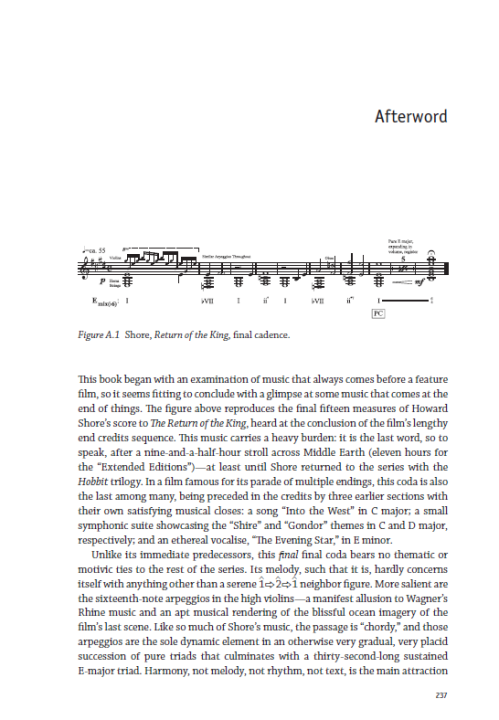
-
"John Williams: A Composer's Life" - Biography by Tim Greiving
Falstaft replied to Marian Schedenig's topic in JOHN WILLIAMS
A lot of you are setting your expectations very high with Tim's book. I think I can safely say those expectations will be not just met but exceeded. At the risk of making @Maestro blush, I think this is the best possible version of a biography of Williams you can imagine. -
??
-
-
https://thelegacyofjohnwilliams.com/2024/07/30/anakins-theme-essay/
-
Hehe, I knew the score as soon as I saw the [name redacted] theme in the horns, and remembered the specific cue from that fff low E in the fourth measure. Here's one, not too hard but not too easy either I think.

-
-
Well done! This, and the few measure that succeed it, is one of my favorite transitions in all of Williams.